Showing posts with label klederdracht. Show all posts

Friday, September 7, 2012

Lederhosen Bags


Today I will disclose why I am in a Bavarian mood this week :) It all started two years ago, when I found two vintage kid's Lederhosen on a flea market. They were so cute ! I remembered my little brother wearing one in the sixties, although we were living in Holland, and not in Germany at all, quite apart from Bavaria. I think it was the fashion in those days :) I don't know if my brother liked it; next time I see him I will ask him if he remembers it ....


Well, I bought them, but without any idea what to do with it. So, I put them in my traditional costume collection (although only existing out of adult women clothing). But a few weeks later I suddenly thought that I could maybe use the leather for making leather bags, which I was longing to do already for quite some time. But then I would love to keep the cute pockets, and the stitched flap, and the beautiful special Lederhosen buttons....


So, I started to fiddle around and tried to sew it on my sewing machine. But my, otherwise splendid, sewing machine did not like it.... and simply refused to do it. OK, the leather is quite thick, I confess. Buying a special leather foot and leather sewing machine needles did not solve the problem. It wouldn't do the trick. Then I tried hand sewing, making holes and with special thick leather thread bought from a shoe maker on Ebay, I struggled on. My fingers became red, sore and with many pinholes after 60 cm of sewing, so I gave up. Till my hubby gave me some day an old sewing monster ! He had discovered an old man in a neighboring town who collected old sewing machines from the former GDR sewing industry and repaired them. And there he bought me this leather sewing monster.


I was pretty afraid for this monster to begin with; it made quite some noise and went at an enormous speed, with a giant needle through 3 cm thick layers.... And I was fearing for my fingers a bit :) So, it took quite a long time of practicing, and lots of fiddling around with machine parts by my hubby, to get it in a state that I could do my "thing". Three months ago, I finished my first Lederhosen bag, and started to wear it myself to see if everything was ok. Changed some bits and experienced this first bag as pretty practical, sturdy and stylish; got lovely comments on the streets too. 


So, I started to search for vintage Lederhosen on flea markets everywhere, on line and off line. I even found red and green ones ! And Lederhosen specially made for girls with little hearts on it. So, I was hooked. And this week I could finally start listing 5 Lederhosen bags in my P8 Accessories Etsy shop !!!! I invite you to go there and have a look how wonderfully variable and cool these bags have turned out.


So, this is the story of my Bavarian mood, and I am afraid it will hold on for some really long time too .....

Wednesday, September 5, 2012

Button Wednesday : Lederhosen Buttons


It is Wednesday again, so it's BUTTON DAY on my blog !!!!!!!!!!!!!!!!!


As I wrote on Monday, I am in a Bavarian mood :) And I will explain the reason for this later this week .... 
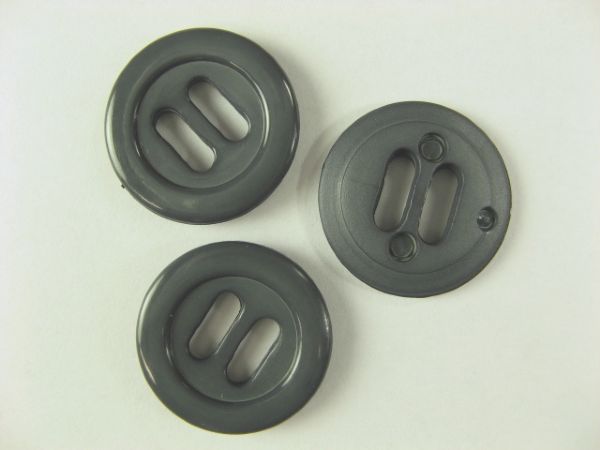
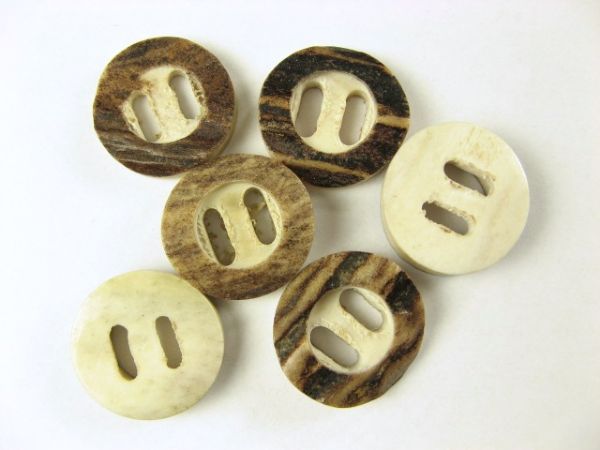
So, my Button Wednesday is also in a Bavarian mood. Did you know there exist special Lederhosen buttons ? The buttons on Lederhosen are to close the front flap that forms the closure of the Lederhosen and to hold the suspenders. They are typically sewn on, not by means of thread, but by means of a small leather strap. Therefore these buttons have 2 elongated holes for the leather straps to go through and a bar in between.


They can be made of plastic, plain or to imitate deer antler buttons (like the ones above), of buffalo horn, or of real deer antler.


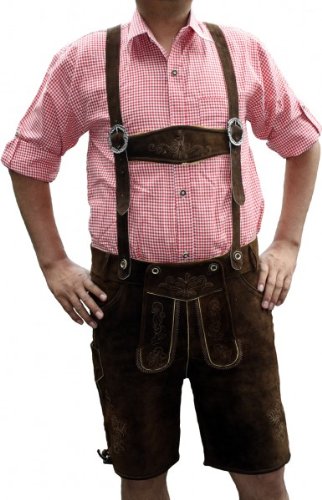
And here these lovely buttons in full action: 


Have you seen a lovely, beautiful, stunning, crazy button or button-related thingy, or did you make something with a button / buttons, or did you even make buttons yourself, blog about it on your blog on Wednesday, and give the link here in the comments so that everybody can enjoy it !!

Saturday, September 10, 2011

Traditional Costumes : Postage Stamps Spain


After the costume stamps of Aragon, we move now furher to the west to Navarre and Basque Country. Both Navarre and the Basque Country are autonomous communities in northern Spain. Basque is spoken in large parts of Navarre and in all three provinces of Basque Country: Álava, Biscay and Gipuzkoa. The traditional costume for the men is made up of a red sash and scarf (a pañuelico or pañuelo), worn with a pair of white pants and white shirt. Red was adopted as the official color because it is a festive color, but blue, green, black or checkered also exist. The white pants and shirt are adaptations of the simple, traditional clothing worn by farm workers and other laborers and is also adopted by pelota players in Navarra and the Basque country. The sash was the belt; the pañuelo was worn around the neck and used to wipe away the sweat of a hard days work. The shoes are espadrilles and the cap is the traditional Basque béret (boina) in either black or red. The women wear a red skirt, black petticoat, white blouse, white headscarf, black apron and on their feet laced leather sandals with woolen socks, or white espadrilles decorated with red ribbons. Only in some valleys of Navarre, there still exist some very different traditional costumes, more like the ones of Huesca in neighboring Aragon. The first stamp above shows such a beautiful antique costume of Valle del Roncal in Navarre. It is from a very large costume series issued from 1967 to 1971. All other stamps show the more usual red and white Basque costumes. The second stamp above celebrates the "running of the bulls" at the San Fermin Festival in Pamplona, the capital city of Navarre.


The next two stamps show the costumes of Álava and Gipuzkoa. Both stamps are again from the large costume series of 1967-1971.


The next two stamps show the costumes of Biscay. The first one is again from the large costume series of 1967-1971. The second one is from a series of Spanish Zarzuela's issued in 1983, with a scene from "El Caserio" from Basque composer Jesús Guridi Bidaola.


You can find Navarre (grey) and the Basque Country (purples) on this map of Spain (in the north):


Tuesday, August 30, 2011

My Flickr Favorites : Traditional Costume North Netherlands


Today we move from the east of The Netherlands to the north of The Netherlands, the provinces of Friesland, Groningen and Drenthe. There are differences in the costumes between the various regions in this area, but they are very difficult to see for outsiders. That's why I combine them here in the mosaic. The women wear a rich costume (silk, wool, damask) with the characteristics of the crinoline fashion, namely a tailored upper part with a wide skirt and petticoats. Above it they wear a scarf and an apron made of embroidered lace. The most striking element however is the the broad gold casque, a goldcap that covers the entire head. Above the gold casque they wear a lace cap with a small pleated tail.

For more flickr favourites see ArtMind's blog.
1. People of The Netherlands , about half a century ago, 2. Lace headdress, 3. Ljouwerter Skotsploech-Folklore Dancing-Group, 4. Ringstekken Burgum


And two picture postcards from my own collection.


Tuesday, August 23, 2011

My Flickr Favorites : Traditional Costume East Netherlands


Today we move from the south-east province of Limburg further north to the east of The Netherlands, the provinces of Gelderland and Overijssel. This part of the Netherlands is the Saxon part, where the people speak low Dutch Saxon and the traditional costumes are very similar. There are differences between the various regions (Achterhoek, Twente, Veluwe, etc.) in this area, but they are very difficult to see for outsiders. That's why I combine them here in the mosaic. The costume itself was an oldfashioned dark, mostly black, city dress. The cap for Sundays, holidays and special occasions was made from beautiful types of lace with a long tail at the back; it was called the "knipmuts". A poorer fashion of this cap was the same model but then crochetted. During weekdays smaller white caps in various forms were worn, but the most frequently seen one is the "plooimuts". The Dutch word "plooi" means "pleat", and this cap has a great number of beautiful large pleats all around.

For more flickr favourites see ArtMind's blog.
1. The lady who makes those beautiful bonnets - Oud Lunterse Dag - Village festival Lunteren, 2. People of The Netherlands , about half a century ago ..., 3. Traditional Dutch Costume Nr 2, 4. DSC05570 Volksdansen 18-04-2009


And two picture postcards from my own collection.


Tuesday, July 12, 2011

Flickr Favorites : Traditional Costume Zuid-Beveland, The Netherlands


Today in the Flickr Favourites we move a little bit to the east from the former island of Walcheren to the former island of Zuid-Beveland in the province of Zeeland. The costume looks a bit similar to the one of Arnemuiden on Walcheren, especially the kraplap (bodice) and the shawl. The cap is very different. It has a very large oval egg-shape, at least if the wearer was part of the protestant population. It has a trapeze shape, when the wearer was part of the catholic population. Actually, the basic form of the protestant and catholic caps is the same, they are only stiffened and folded in another shape. Characteristic for the Zuid-Beveland costume is also the very large golden end plates of the head-iron. The first row of the mosaic shows the protestant costume; the second row shows the catholic costume.

For more flickr favourites see ArtMind's blog.

1. [Three Dutch women.], 2. Zeeuwse Klederdracht, 3. Antonia Chamuleau and Mattheus de Baar, 4. Terneuzen 09052009 DSC_0255

And two picture postcards from my own collection (the first one is the protestant costume, and the second one is the catholic costume).


Tuesday, June 21, 2011

Flickr Favorites : Traditional Costume Walcheren, The Netherlands


Today in the Flickr Favourites we descend even more along the North Sea coast until we reach the island of Walcheren in the province of Zeeland. The costume from Walcheren is colourful and girly with deep cut jackets and bodices underneath; it has a white lace cap with a tail for the little girls and a small fitting white lace cap for women. The latter cap is held on the head by a visible ear-iron. In some area's of Walcheren (around the city of Middelburg) the women keep their girl cap with the tail.

For more flickr favourites see ArtMind's blog.

1. Klederdracht, 2. People of The Netherlands , about half a century ago, 3. Terneuzen 09052009 DSC_0294, 4. Schorten

And two picture postcards from my own collection.


Tuesday, May 31, 2011

Flickr Favorites : Traditional Costume Katwijk aan Zee, The Netherlands


Today in the Flickr Favourites it's the turn of the traditional costume of Katwijk aan Zee in The Netherlands. After Scheveningen last week, we still stay at the North Sea coast of Holland, but go 16 km to the north. Again a fishing village turned into a beach resort. The costume is very similar to the costume of Scheveningen, except for the lace cap which is smaller than in Scheveningen, and the head iron end ornaments are square and not oval as in Scheveningen.

For more flickr favourites see ArtMind's blog.

1. Goes 2010, 2. zuid-holland, 3. Jansje Hageman , 4. Surprise on the beach 3

And two picture postcards from my own collection.


Tuesday, January 18, 2011

Tidbits : Flickr Favourites


We are traveling to Berlin on Thursday because hubby must hold a presentation on a conference and we need new passports from the Dutch Embassy in Berlin. I was looking around the internet what I could do when hubby has his talk and found out it is Fahion Week in Berlin. And then I suddenly saw the announcement of the show of De Leon by Ricardo Ramos with pictures of models in what looked like the traditional costume of Staphorst in The Netherlands. And that is true; it was Staphorst. He called it "Reconstructing Klederdracht"; klederdracht is the Dutch word for traditional costume. He says: "A small town called Staphorst in The Netherlands catched the designer’s attention this time, its female inhabitants are still wearing the same fashion for almost a couple of centuries! Something very unique in Europe where fashion has been a strong statemant of contemporary life and social change especially from last century.Their “Ready to Wear” hand made traditional garments (Klederdracht) have been transformed following the traditional methods used to construct them, creating a collection between austerity and fantasy flirting with folk." Sadly the show is on Wednesday night and only on invitation :((( So, I will not be able to see it. What I would give or do to be there !!!!

So, this week's Flickr favourites are about Staphorst and its klederdracht !

For more flickr favourites see ArtMind's blog.

1. Staphorst, 2. Dagelijks-05, 3. Staphorster jasbeschermer gehaakt, 4. Klederdracht