Showing posts with label mother of pearl. Show all posts

Wednesday, July 11, 2012

Button Wednesday : Mother of Pearl


It is Wednesday again, so it's BUTTON DAY on my blog !!!!!!!!!!!!!!!!!

I came across the following picture on Flickr; it's a giant button made of tiny mother of pearl buttons.
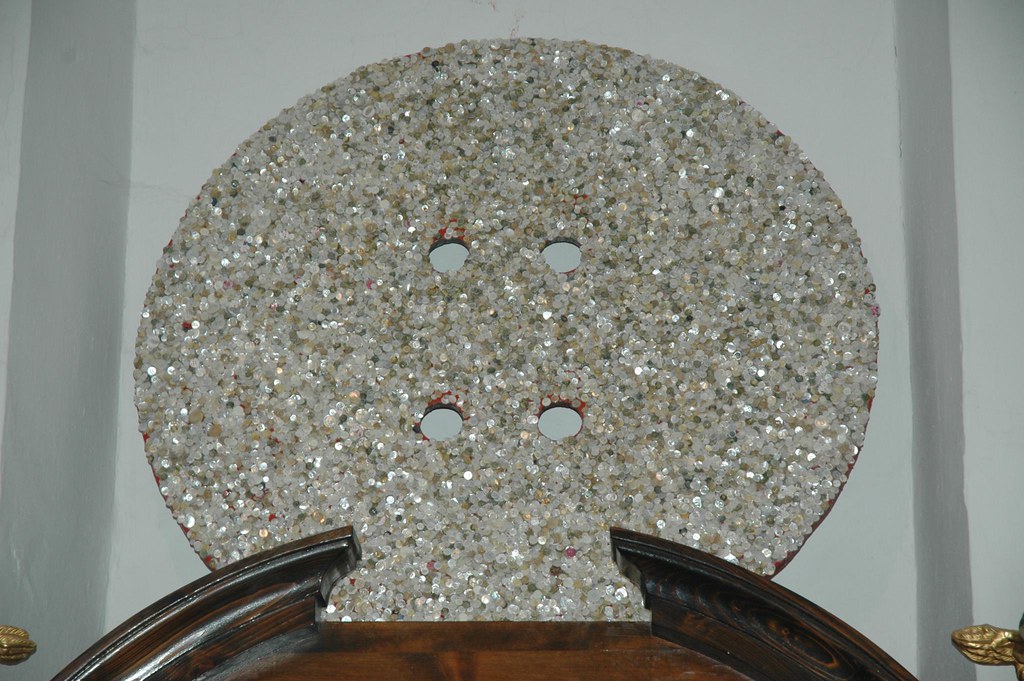
Looking further I found out that it was part of an exhibition about 100 years of mother of pearl production in Austria (Stift Geras 2009). I had no idea that there was such a thing as a mother of pearl industry in Austria, a country without any sea coast .... 


The production started with shells from the rivers Thaya and March, which were gathered in great quantities by the farmers when straightening brooks. The shell meat was given to the Swine, and the shells were made into buttons and other decorations.

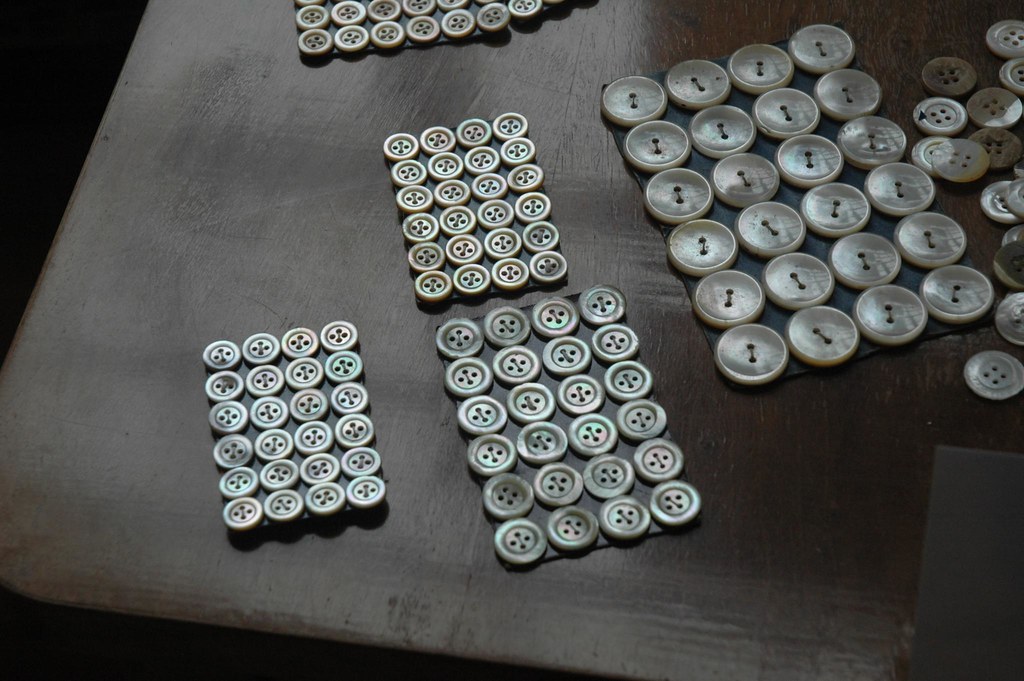
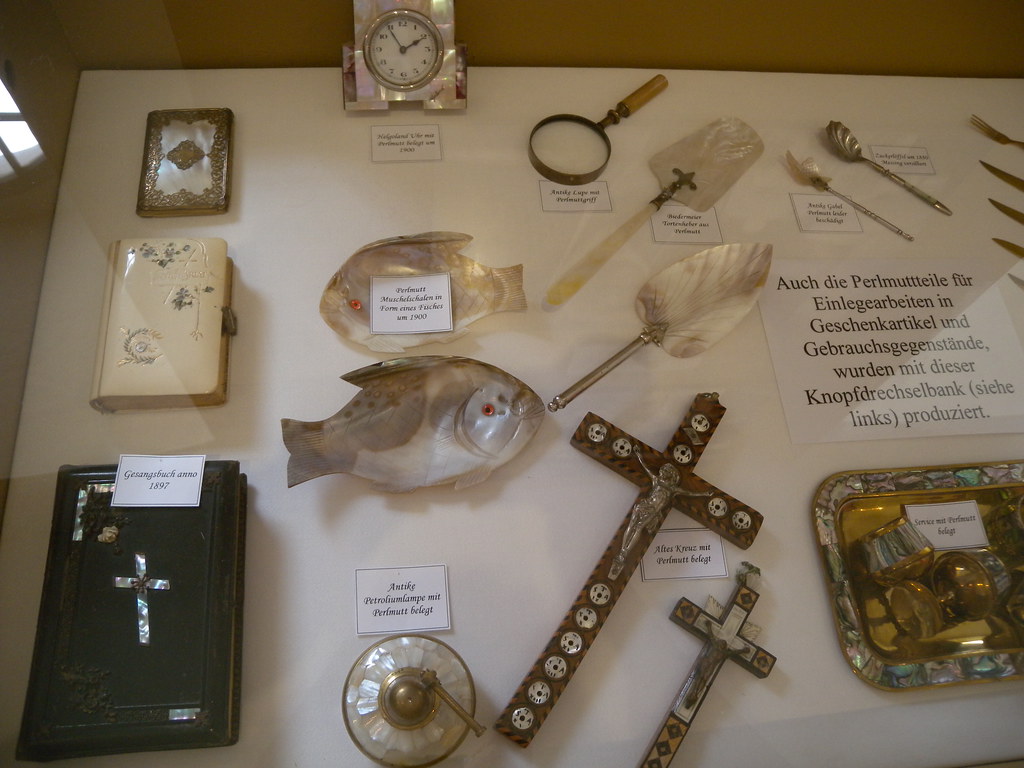

(all pictures from weisserstier)


They had also the old and new production machines in the exhibition. How I wish I had known about this exhibition in time. I would love to see how these buttons were made ! But I found out that I can visit the fabric, so I plan a trip to Austria :)
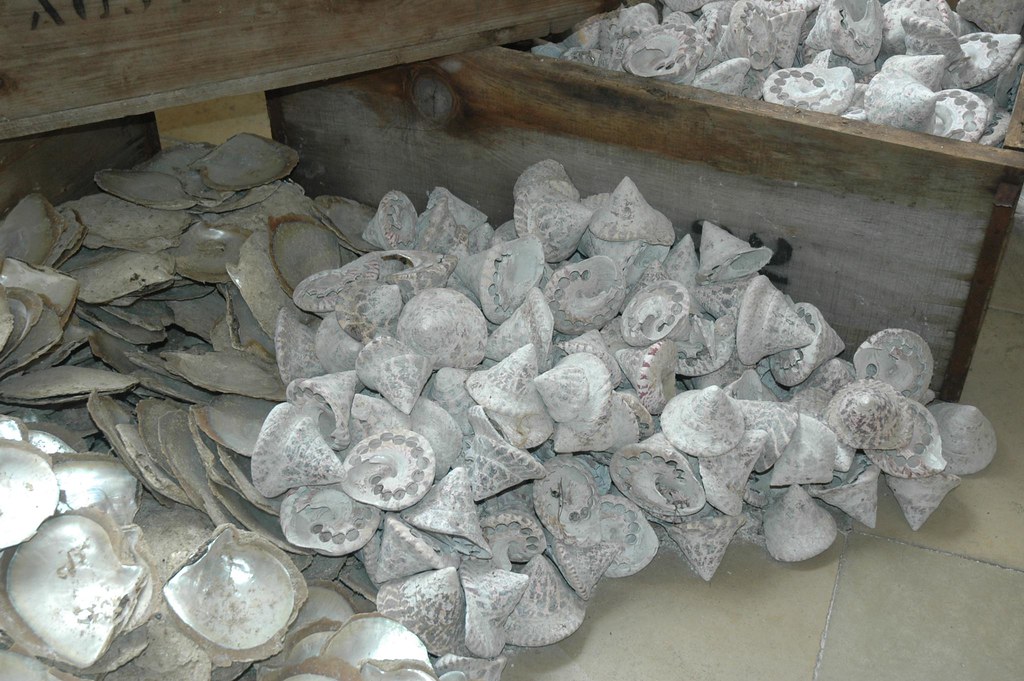
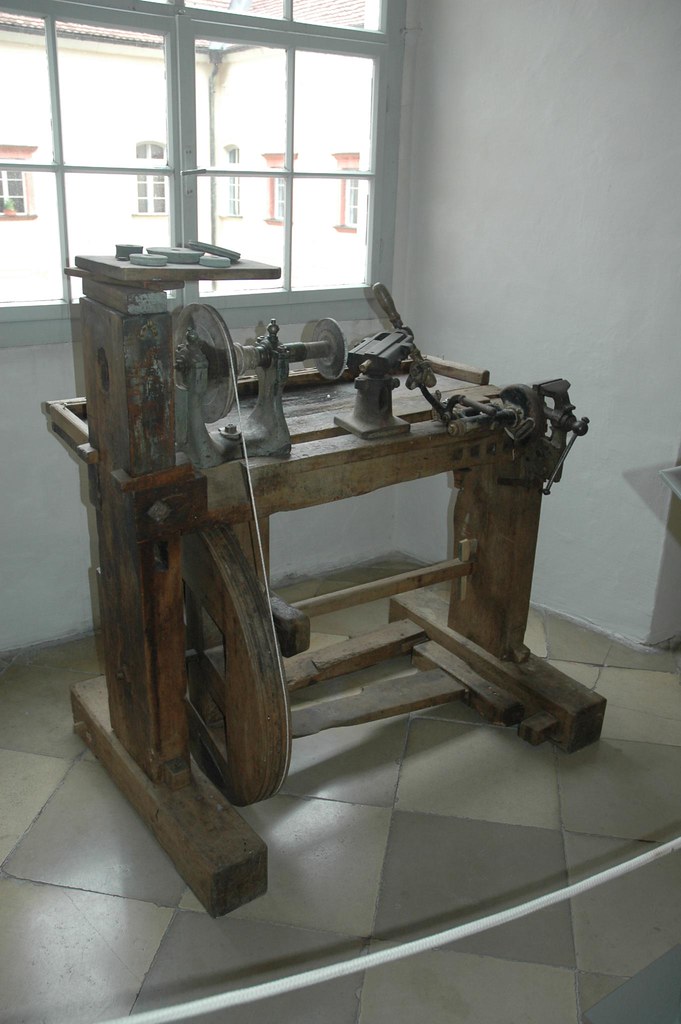

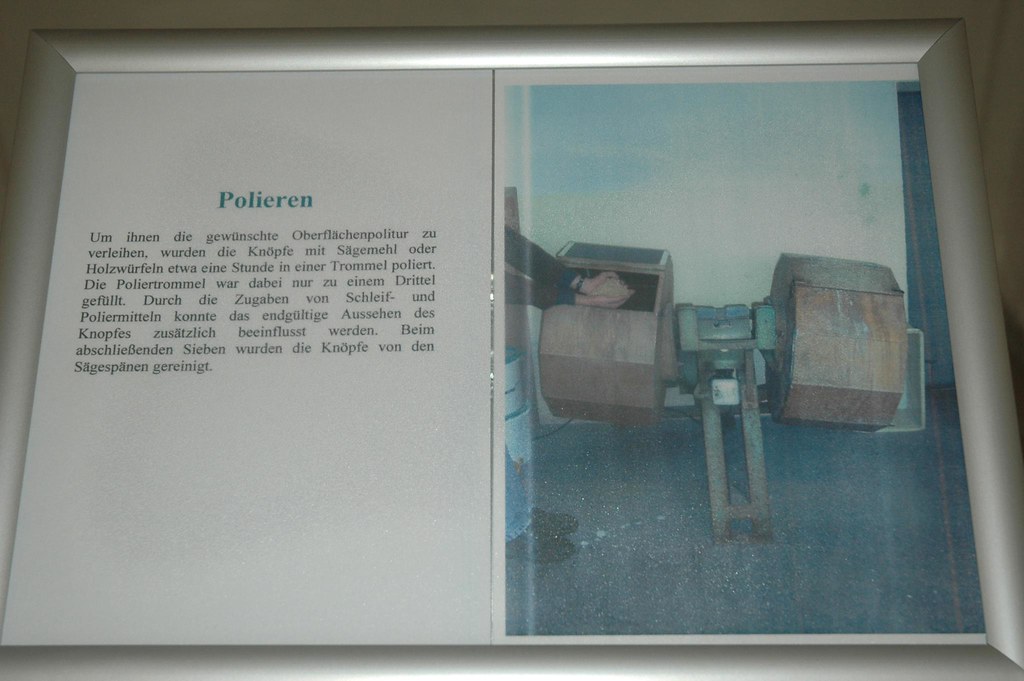


(all pictures from weisserstier)


Have you seen a lovely, beautiful, stunning, crazy button or button-related thingy, or did you make something with a button / buttons, or did you even make buttons yourself, blog about it on your blog on Wednesday, and give the link here in the comments so that everybody can enjoy it !!

Friday, April 8, 2011

Etsy : Earrings


This week's earrings are these "orange teeth" by EST member Silja from Estonia. They are from orange coloured mother of pearl and they really look like some kind of big animal teeth.

Silja is taking a break with her earring activities, but she makes lovely drawings too; have a look in her 5erg shop on Etsy:

Sunday, October 31, 2010

Bags : Snowflakes


One month ago I went with my neighbour friend to a flea market; she told me she had so much linen, doilies, tableclothes, etc. from her mother, grandmother and aunt that she wanted to get rid of them. So we went to the market and sold almost nothing ..... But I was secretly very happy about that :) I loved all this old stuff and my mind was already going crazy with ideas what I could do with all these old textiles. So, we did a deal, she wanted some old porcelain plate from me and I got the doilies; and a lovely bouquet of button flowers gave me the old linen ! And I had to promise her that she would be the first to see the first creation with it. Well, I did keep my promise, and as a consequence my friend Anne is posing on the pictures of my first snowflake bag too. She was happily surprised to see her old doilies making such a lovely appearance and loves the snowflake bag (so I will make her one).

I have a lot of lovely beige, grey and white woollen fabrics (loden fabric), almost like very thick felt, and the doilies look great on those fabrics. So, I made this bag of such woollen fabric, lined it with beige cotton and put a large metal white zipper in it. On both sides I sewed the doilies, and I sewed a strap of heavy cotton webbing with large vintage mother of pearl buttons on one side of the bag. It's big and beautiful ! And it could go directly into this week's EST challenge because of the snowflakes :)

And it is for sale in my etsy shop ! Lots of snowflake bags still to come .....

Tuesday, March 24, 2009

Buttons : Mother of Pearl

(from my own collection)


There were quite some old-fashioned white mother of pearl shirt buttons in my grandma's button box; they always fascinate me. They have a nice cold solid touch, a beautiful shiny and iridescent appearance and often a very interesting rough backside, they are all different and they are heavier than plastic buttons. I learned that there are actually two types of mother of pearl buttons; those made from freshwater mussel shells and those made from ocean shells, with the latter having more brilliance. Round blanks are cut from the washed shells, polished and drilled.


Button fabrication (from Stephanie Hackstein. Buttons. History and Production)

Freshwater mother of pearl buttons were made from 1892 to the 1960s along the Mississippi River in the USA. Because at the end of the 19th century, the ocean shell buttons were very popular but expensive, a German immigrant button maker started to create buttons from the freshwater shells. It was a great success; a huge clam button industry was the result. Almost every man, woman and child along the Mississippi River was working somewhere in the button industry, families camped along the shores, catching, cleaning, drilling, polishing, carding, etc. It is said that the smell was really aweful in those areas. Finally they could not compete anymore with the cheaper and more durable plastic buttons, and the freshwater mother of pearl button industry died out.

(from Iowa Pathways; The Pearl Button Story)

Beautiful ocean mother of pearl buttons were made in the 18th and 19th century, often carved, engraphed, dyed, embellished with jewels etc. They were made in France, Germany and the UK, but the shells came from the Philippines, Japan, Australia, Panama, Egypt, etc. Those first two countries are still today's main ocean shell button suppliers.

(from The Keep Homestead Museum, Monson MA)

The most expensive shell is the white macassar from the East Indies, and the most pupular ones are probably the abalone with its striking colours and the smoked black Tahiti shell, but buttons were also made from cowries, helmet shells, pinna shells and conches.

(1. abalone from annkelliott on flickr, 2 white macassar from Miyoshi, 3 pinna from wildsingapore, 4 helmet from c70iang on flickr, 5 black Tahiti from Southern Paua Ltd., 6 tiger cowrie from pieceoflace on Flickr, 7 conch from Debi123 on Flickr, and 8. yellow sand shell from Freshwater Mussels of the Upper Mississippi River System; U.S. Fish & Wildlife Service)


Based on:
Marilyn V. Green. The Button Lover's Book (Creative Machine Arts Series). Chilton Book Co, 1991. ISBN 978-0801980107
Muscatine Pearl Button Museum
Stephanie Hackstein. Buttons. History and Production. Markstein Verlag, Filderstadt 2007. ISBN 978-3-935129-40-4
The Keep Homestead Museum, Monson, MA

Thursday, February 19, 2009

Buttons : The PhatSheep Handmade Button Swap


For the first time I participated in a swap. This was the Handmade Button Swap organized by PhatSheep. We had to handmake a coherent set of 6 buttons and an item of our choice that's using a handmade button. And this all before the 14th of February. I found it very exciting !

I decided to make some buttons by casting ceramic powder (into chocolate forms), drilling holes into them and painting them with turquoise and silver mother of pearl glass colour. It was great fun !

The item I made was a brooch made of one large vintage grey button in the middle with lots of small vintage grey buttons sewn around it. Everything is topped of with one of the ceramic buttons I made for this swap, turning it into a blue-silvery flower.

This was the extra item I made, using a much larger specimen of the handmade buttons I made for the swap. It's a necklace made of a sheer grey-silvery fabric tube, filled with silver painted wooden beads and knotted together with the large ceramic shank heart button in the middle.


And this is what I received today from noisette handmade. She made me a set of 6 beautiful linen buttons painted with 6 different motives: ladybird, bird, leaf, heart, apple & mushroom. They are so sweet ! Her item was a linen pouch with a blue & white striped bottom and a large linen button sewed on it; it's so cute ! And I got an extra blue felt flower brooch from her too. Moreover, she gave me some lovely piece of fabric, some pieces of trims, some red buttons and chocolate (!).
Thank you so much noisette to make this first swap an unforgettable one ! You can see all the entries coming in here.

Monday, February 16, 2009

Buttons : Button Blankets

Haida button blanket decorated with a human figure (ca. 1900); wool, dentalium shells, abalone shell, pearl buttons (from Canadian Museum of Civilization Corporation)

A few years ago I found one of the most spectacular button art creations I had ever seen by surfing on the internet. I am talking about the North American Button Blankets. I fell immediately in love with this kind of button art !


Haida button blanket with a double-headed Eagle (ca. 1900); wool, dentalium shells, abalone shell, pearl buttons (Photo from Canadian Museum of Civilization Corporation)

From around 1800, Pacific Northwest Coast Indian tribes (like the Haida, Tsimshian, Tlingit, Nisga'a and others) often traded furs for woolen blankets from maritime european traders and later the Hudson's Bay company. Rather than sleeping equipment, the blankets were made into robes for ceremonial purposes; they were worn over the shoulders like capes.


First Nations people in button blankets at Quatsino Sound (Ben W. Leeson, 19--) from Vancouver Historical Society

Why were they decorated with buttons ? One legend tells that a member of the Kwagiutl tribe saw once a Pearly King and liked what he saw. Another legend tells it was inspired by the white pearl buttons on the uniform of a British sailor. Truth is that early pictures show that the blankets were first decorated with feathers and abalone shells. These were eventually replaced by mother of pearl buttons, obtained from traders and sailors' uniforms, and were much easier to use. Most blankets are made of dark blue duffle with red flannel appliqué outlined with pearl buttons. The central crest typically portrayed a symbol of the wearer's family heritage. Symbols found are the frog, raven, whale, thunderbird etc.


Tlingit button blanket with killer whale (1891-1898); wool, pearl buttons (from The Burke Museum of National History and Culture)

Traditionally, these robes were worn during dance ceremonies. The dancer would move displaying the shiny patterns of the shell buttons to the audience. The community would know the dancer's family clan and its historial status just by the design on the robe. The robes were handed down from generation to generation. After 1880 the Indians were discouraged by the governments to hold their traditional ceremonies and not many button blankets were made anymore. Around 1950 a revival of the button blanket occurred. New button blankets are made, and classes in button work are offered. The button blanket has now become the most popular piece of contemporary feast attire. Today, buttons are sometimes used to fill entire zones of the design elements and even the whole field of the background.


Tlingit button blanket with frog (1920s); wool, pearl buttons (from The Burke Museum of National History and Culture)

A modern re-invention of
the button blanket concept by
Coho Creations:


Based on:
Wikipedia
Clarissa Hudson Studio
The Button Lover's Book (Creative Machine Arts Series) by Marilyn V. Green
Make a Button Blanket

New button blanket (from Shawl Lady dot Com)

Saturday, October 4, 2008

Buttons : London's Pearlies

(from wikipedia)

This week's button fact I want to share with you is about the Pearlies from London, also called the Pearly Kings and Queens. The Pearlies are raising money for charities and can often be seen around London participating in various Parades and Carnivals, and the most striking thing about them is that they wear clothing that is fully covered with mother of pearl buttons. The magnificent suits, hats and dresses, are handed down from generation to generation as well as the Pearly King and Queen titles.

(Photo from The London Pearly Kings and Queens Society)

The tradition started in 1875 with an orphan called Henry Croft, roadsweeper from profession, who wanted to help those who were more unfortunate than himself and realised that in order to collect a lot of money he needed to draw attention to himself which was quite difficult for the very small man as he was (less than 5 feet tall). So as Henry swept the market streets he started to collect all the pearl buttons he found that had fallen off of the clothes of people visiting the market, and when he had enough he started to sew them on his cap and then continued until his entire brown wool suit was filled. The idea he got from the clothing of the London costermongers that had pearl buttons sewn on the piped seams of their trousers and waistcoats. They distinguished themselves from the other market traders in this way. It is said to have sprung from a Japanese cargo ship that lost its cargo of pearl buttons in the Thames in the 1860's. The costermongers looked after each other if they were sick or in need by organizing a collection. Traditionally, costers elected "Kings" to lead them against bullies seeking to drive them from their pitches. Henry Croft was in so much demand for his charity work, as many of London's hospitals, workhouses and orphanages needed help, that he turned to the costermongers. Many of the costermongers became the first Pearly Families. There were 28 families, one for each of the London boroughs, one for the City of Westminster, and one for the City of London.

Carole Jolly, Pearly Queen of Crystal Palace, with the statue of Henry Croft, The Crypt at St Martins in the Field.

Each outfit can hold many tens of thousands of buttons on it and can weigh as much as 30 kilograms or more. There are two types of suit - a Smother Suit and a Skeleton Suit, the former having very little cloth showing and totally covered in buttons (those are the oldest costumes), and the latter having far fewer buttons, often decorated with mystic symbols, like stars, moons, suns, flowers, diamonds, Trees of Life, Eyes of God and fertility designs. Some of the early costumes are still worn today.

(from Citynoise)

Modern re-inventions of the pearlies concept:


Based on:
Wikipedia
The London Pearly Kings and Queens Society
Citynoise
The Button Lover's Book (Creative Machine Arts Series) by Marilyn V. Green

Wednesday, August 13, 2008

Challenge : Starry Night (Van Gogh)


This week's theme for the European Street Team's challenge is inspired by Vincent van Gogh's painting "Starry Night" and was suggested by the previous challenge winner, Star of the East. She is collecting all the entries in her blog and they will also be published in the EST blog later on.

I made this Vincent's Starry Night Cuff. Beautiful small dark blue mother of pearl buttons are knotted together to form this matlike cuff. I took the backsides of the buttons for the outside of the cuff because that rough shell structure looks very much like oil paint. Golden coloured star shank buttons are embroidered on top of the cuff to make the night starry.


Thursday, July 31, 2008

Challenge : Summer


This week's EST (European Street Team on Etsy) challenge is: "summer" ! You can see the entries appearing on Nanouke's blogpost.

For me summer means lots of sun, beach and shells; I love to stroll on the beach and collect all kinds of shells. So I decided to do something with it for this challenge. I combined them with gorgeous mother of pearl buttons - also made from shells - and made this necklace out of it: