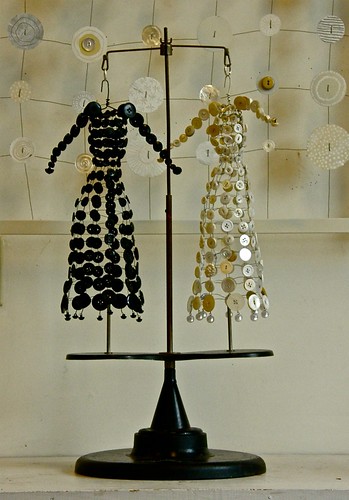
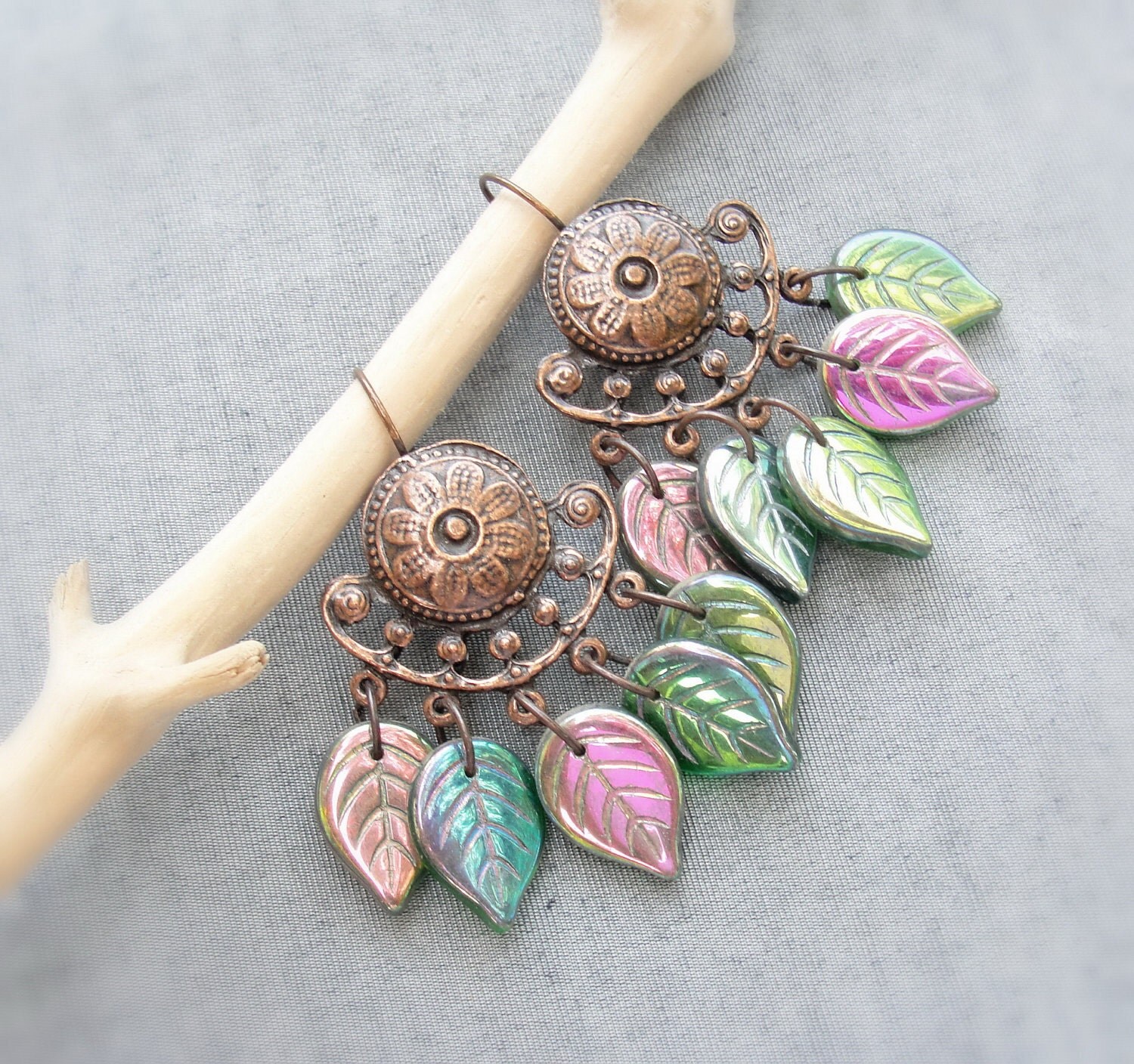
It is Wednesday again, so it's BUTTON DAY on my blog !!!!!!!!!!!!!!!!!
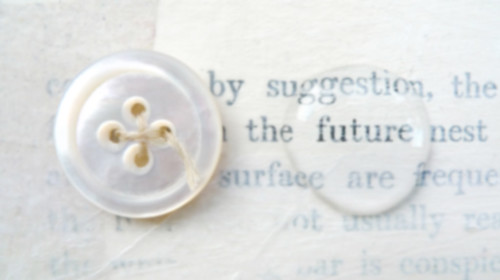 Today I show you some fantastic button photographs I found on Flickr. The one above is by Fiona of wild goose chase; I love the soft focus and the text shining through the water drop.
And here the water turned into ice.... This photo is by Sam Turner; isn't it mysterious ? 
In the next photo it looks if the buttons float on water; it's by Carlos Porto. 
Here the buttons are disappearing in a black hole; photo by Alan of Sunset Sailor. 
In this photo, the button itself looks like a black hole; photo by Neal Fowler. 
And in this last photo, the buttons seem to stream away.....; photo by Cecilia Esbjornsson of Nifty loves crafting. 
Have you seen a lovely, beautiful, stunning, crazy button or button-related thingy, or did you make something with a button / buttons, or did you even make buttons yourself, blog about it on your blog on Wednesday, and give the link here in the comments so that everybody can enjoy it !!
Today we move from the east of The Netherlands to the north of The Netherlands, the provinces of Friesland, Groningen and Drenthe. There are differences in the costumes between the various regions in this area, but they are very difficult to see for outsiders. That's why I combine them here in the mosaic. The women wear a rich costume (silk, wool, damask) with the characteristics of the crinoline fashion, namely a tailored upper part with a wide skirt and petticoats. Above it they wear a scarf and an apron made of embroidered lace. The most striking element however is the the broad gold casque, a goldcap that covers the entire head. Above the gold casque they wear a lace cap with a small pleated tail.
For more flickr favourites see ArtMind's blog.
 1. People of The Netherlands , about half a century ago, 2. Lace headdress, 3. Ljouwerter Skotsploech-Folklore Dancing-Group, 4. Ringstekken Burgum
And two picture postcards from my own collection.


After the Catalan costume stamps from France and Andorra in the last weeks, we look this week at the Catalan costumes on stamps from Spain. Catalonia is one of the seventeen autonomous communities of the Kingdom of Spain. It comprises four provinces: Barcelona, Girona, Lleida and Tarragona, and borders France and Andorra to the north, Aragon to the west, the Valencian Community to the south, and the Mediterranean Sea to the east.
The stamps above are from a very large costume series issued from 1967 to 1971. They show the Catalan costumes from Barcelona, Girona, Lleida and Tarragona, respectively.

The next stamp is from 1977 (series of Spanish celebrities) and shows the Catalan poet Jacinto Verdaguer (1845-1902) in the barretina (traditional Catalan hat).
You can find Catalonia on this map of Spain (the pink areas in the north east of Spain):

Today we move from the south-east province of Limburg further north to the east of The Netherlands, the provinces of Gelderland and Overijssel. This part of the Netherlands is the Saxon part, where the people speak low Dutch Saxon and the traditional costumes are very similar. There are differences between the various regions (Achterhoek, Twente, Veluwe, etc.) in this area, but they are very difficult to see for outsiders. That's why I combine them here in the mosaic. The costume itself was an oldfashioned dark, mostly black, city dress. The cap for Sundays, holidays and special occasions was made from beautiful types of lace with a long tail at the back; it was called the "knipmuts". A poorer fashion of this cap was the same model but then crochetted. During weekdays smaller white caps in various forms were worn, but the most frequently seen one is the "plooimuts". The Dutch word "plooi" means "pleat", and this cap has a great number of beautiful large pleats all around.
For more flickr favourites see ArtMind's blog.
 1. The lady who makes those beautiful bonnets - Oud Lunterse Dag - Village festival Lunteren, 2. People of The Netherlands , about half a century ago ..., 3. Traditional Dutch Costume Nr 2, 4. DSC05570 Volksdansen 18-04-2009
And two picture postcards from my own collection.


We stay this week in Andorra, but this time we look at the Spanish postage stamps. Andorra, officially the Principality of Andorra, is a small landlocked country in southwestern Europe, located in the eastern Pyrenees mountains and bordered by Spain and France. The Principality was formed in 1278. The role of monarch is exercised jointly by the two co-princes, the President of the French Republic and the Bishop of Urgell, Catalan Countries. Therefore, Andorra has French and Spanish stamps, issued by France and Spain, respectively.
The Andorran costume is very similar to the Catalan costumes worn in France and Spain. For women the costume features a full, mostly flowered skirt over a white petticoat; a blouse (sometimes covered by a flowered shawl); long, black, fingerless net gloves; and black espadrilles (cloth sandals) with white stockings. The traditional costume for men is a white shirt, dark knee-length pants, white stockings, black shoes, broad red sashes tied at the waist and the barretina (the traditional Catalan cap).
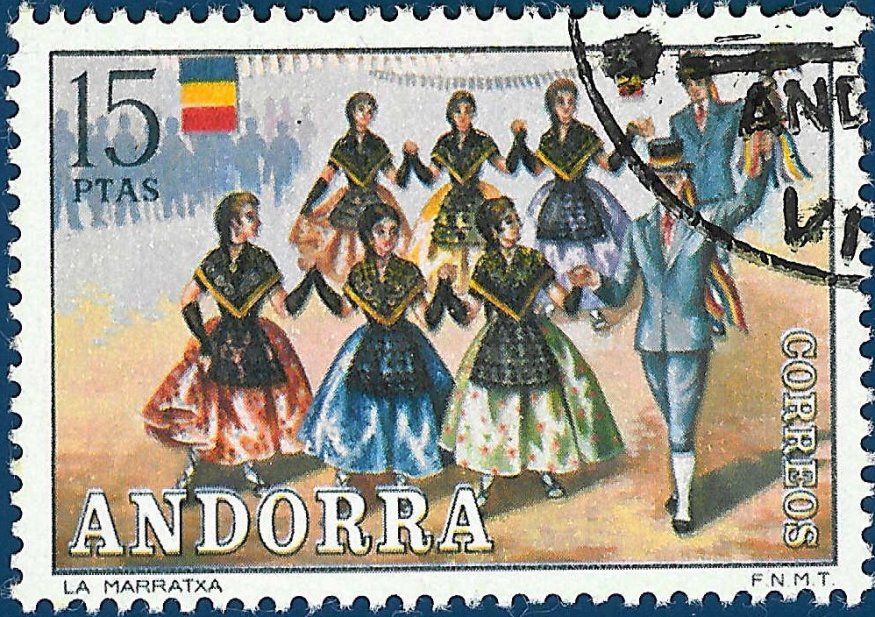
The stamps above are from a series of 1972 celebrating Andorran customs. They show "Les Caramelles" (traditional Easter songs choir) and La Marratxa (a traditional dance representing the two co-princes dancing with the six parishes), respectively.

 The next two stamps are from 1975 ("Espana 75" International Stamp Exhibition in Madrid) and 1978 (50th Anniversary of Spanish Post Office), respectively. They both show postmen delivering post at ladies in traditional costumes.


 These last pictures show a series of 3 stamps with traditional costumes from 1979 (a you woman, a young man and newly-weds) and 1 stamp of the yearly Europa Stamp series, which was about "Folklore and Feasts" in 1981, showing people dancing the Santa Anna dance.
You can find Andorra on this map of France: